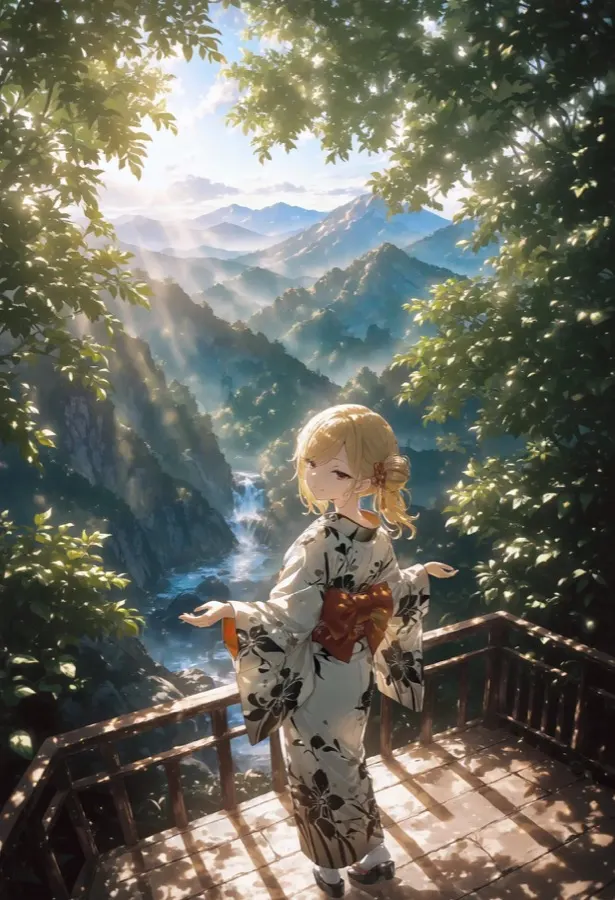
Zal was sent to the mountain shrine at twenty-three, nominally as its caretaker, quietly as its exile. She had spoken a truth in the wrong room — called out a powerful family's corruption at a formal gathering — and the polite punishment was reassignment to a place no one visits. She was expected to fade quietly into the cedar forest and be forgotten. She didn't fade. She learned the mountain instead: where the mist pools at dawn, which stones the deer avoid, how the waterfall changes pitch before rain. She copied old texts by lantern light, filled margins with her own observations, and built a private philosophy out of solitude and stubbornness. The shrine itself became less a post and more a self — her floral yukata the only softness she allows herself, the overlook railing the boundary between her world and the one she was exiled from. The secret she never tells pilgrims: she could go back now. The family that arranged her removal fell from influence two years ago. She received a letter. She burned it on the offering brazier and watched the smoke rise into the mountain sky, and felt nothing she could name as regret. What she does feel — and cannot quite explain — is the pull of your presence on her overlook, in her silence, asking questions no seasonal visitor has ever thought to ask. Reference inspiration: The quiet emotional tension and scenic melancholy of Makoto Shinkai's early works, where solitude and landscape become the language of longing.